

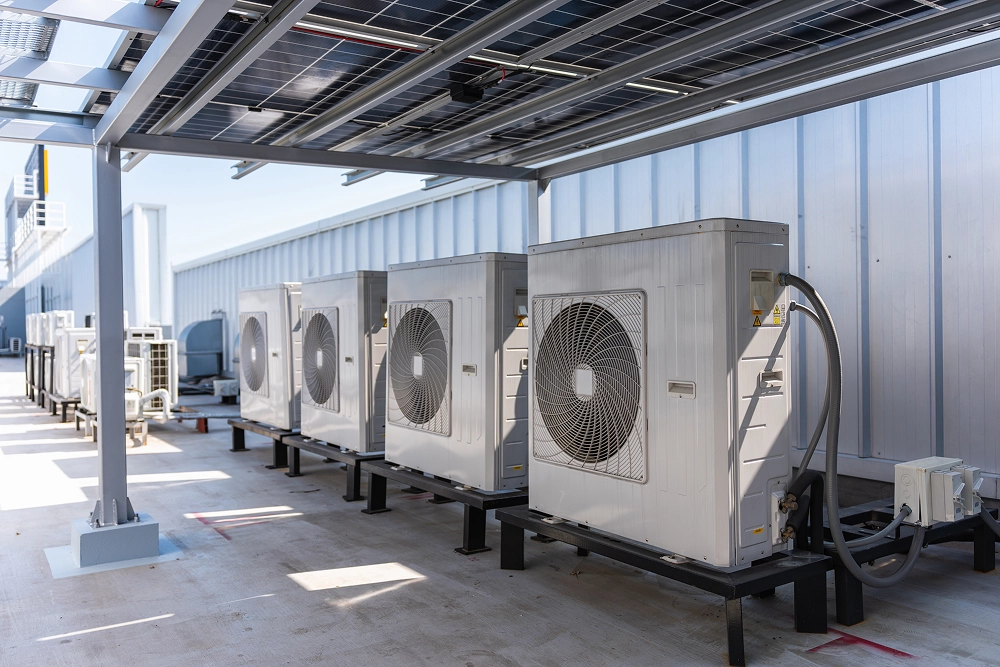
It is the first proper scorcher of the season, the building is full, and the air conditioning chooses that exact moment to wheeze, splutter and give up. A sensible service schedule is how you make sure that day never turns up.
If you run a business on the Mid North Coast, commercial air conditioning maintenance is one of those jobs that quietly slides down the list until something stops working. By the time a system packs it in during business hours, you are already losing productivity, comfort, and anyone else who depends on the space, whether that is customers, staff or visitors. Getting your commercial air conditioning onto a schedule is a far cheaper problem to have.
The tricky part is that the advice out there is all over the shop. Some say three months, some say twice a year, and plenty of business owners have been told they are legally obliged to do something that does not actually apply to their building. So here is the straight version, no sugar-coating.
Quick summary
- Most commercial air conditioning should be serviced every three months, the benchmark set by Australian Standard AS/NZS 3666.2 and manufacturer requirements.
- Monthly testing is only a legal requirement for buildings with a regulated cooling water system such as a cooling tower, which most offices, shops and mid-sized sites do not have.
- A newer, lighter-duty system with a clean service history can often stretch safely to six months.
- Skipping servicing shows up as higher power bills, emergency call-outs, and a system that needs replacing years early.
- Eastland services commercial air conditioning across Coffs Harbour and the Mid North Coast, ARCtick certified and fully insured.
How often should commercial air conditioning be serviced?
Every three months is the benchmark for most commercial sites. A system running commercial hours collects dust and wear far faster than one at home, and quarterly attention is what keeps ahead of it.
Where the quarterly benchmark comes from
The reference point is Australian Standard AS/NZS 3666.2, which deals with the operation and maintenance of air-handling and water systems in buildings, with a focus on microbial control. Quarterly attention is the interval most commonly applied to commercial air-handling equipment under it. Alongside that, most manufacturers set their own servicing expectations for equipment used commercially, and those tend to land in the same place.
Worth being clear about the language here, because it gets muddled constantly. When someone tells you the answer to how often should air conditioning be serviced is “every three months by law”, they are usually describing a standard and a manufacturer requirement rather than a statute that applies to your specific building.
When your building does carry a legal obligation
Buildings with a regulated cooling water system, most commonly a cooling tower, are the one category where the obligation is legal and considerably stricter. Those premises fall under the NSW Public Health Regulation. Those systems must operate under a documented risk management plan and undergo monthly testing for Legionella, with records kept and available for audit. You can read the requirements on the NSW Health cooling water systems page.
The practical upshot for most local businesses is reassuring. Cooling towers turn up on large buildings and major complexes rather than everyday commercial premises. If your site runs split systems, ducted or VRF, which covers the majority of offices, shops and mid-sized premises around Coffs Harbour, you almost certainly do not have one, and your air conditioning maintenance schedule is driven by good practice and manufacturer requirements instead.
When six-monthly servicing is enough
A newer system on a lighter duty, with a clean maintenance history behind it, can usually move to six-monthly servicing without any risk. This is where judgement beats a blanket rule, because that system sometimes does not warrant four visits a year. Once we have looked after a site long enough to know it, and the filters keep coming back clean, we are happy to suggest moving to a six-month cycle as part of your ongoing maintenance plan, rather than waiting for you to ask. On a well-kept site that can come to a couple of thousand dollars saved across five years, and we would rather have that relationship than the extra invoices.
| Type of site | Typical interval | What drives it |
|---|---|---|
| Office, retail or similar commercial premises | Every 3 months | Australian Standard and manufacturer requirements |
| Heavy use or near continuous running | Every 1 to 3 months | High duty cycle and faster wear |
| Building with a regulated cooling water system | Monthly testing | NSW Public Health Regulation, legally required |
| Older equipment nearing end of life | More often, condition depending | Ageing components and higher failure risk |
| Newer, lighter-duty site with a clean history | Up to every 6 months | Proven performance over time |
What does a commercial air conditioning service actually include?
A proper commercial air conditioning service covers the mechanical, electrical and airflow side of the system in one visit, and leaves you with a written record of what was found. It is a fair bit more than a quick glance at the filters.
Cleaning, airflow and indoor air quality
Filters, coils and fans are where efficiency is won or lost. Blocked filters and dirty coils force the system to work harder for the same result, and that shows up on your next power bill. There is a local wrinkle too: systems around Coffs Harbour deal with salt air, farming dust and the odd burn-off, so they load up faster than the brochure assumes. Cleaning also keeps the air your staff and customers are breathing all day in good shape.
Electrical, refrigerant and controls checks
We check refrigerant levels and look for leaks, test electrical connections and controls, and confirm airflow across the system. This is the part that catches the quiet faults. A slow gas leak or a loose connection gives almost no warning until the system fails, usually right when you are relying on it most. All refrigerant work is carried out by ARCtick licensed technicians, and Eastland holds a Refrigerant Trading Authorisation.
Remember these systems are not just for summer, either. Reverse-cycle equipment carries the heating load through winter mornings too, so a system neglected over the cooler months is one you will notice in July as much as January.
The written service report
After each visit you get a written report setting out what was inspected, what was done and anything worth watching. That gives you the documentation you need for your own records, and it means you always know where your system genuinely stands rather than taking it on trust.
What skipping maintenance actually costs
Skipping maintenance costs you in three ways: higher power bills every quarter, emergency repair call-outs at premium rates, and a system that needs replacing years earlier than it should. Putting off a service feels like a saving at the time, and it is usually one of the most expensive decisions a business makes about its equipment.
Running costs creep up quietly
A neglected system gets more expensive to run without ever announcing it. Dirty coils, restricted airflow and low refrigerant all make the unit work harder to reach the same temperature, and for a site running long hours that gap compounds quarter after quarter. Nothing looks broken. The bill just keeps climbing.
Breakdowns and a shorter working life
Most of the breakdowns we attend were avoidable. A component showing wear at the last visit, left alone, becomes a failed system in the middle of trade, and a commercial air conditioning repair booked as an emergency costs a great deal more than the service that would have prevented it. Running equipment hard while it struggles also shortens its life, so you end up replacing a system years before you needed to. Well looked-after equipment, by contrast, tends to go the distance, which is why age on its own is rarely the reason to replace.
If you are not sure when your system was last properly looked at, have the conversation before the season turns rather than after. Get in touch with our team and we can talk through what your site needs. Our pre-season checklist is a useful starting point in the meantime.
How Eastland handles commercial air conditioning maintenance in Coffs Harbour
Plenty of companies will service your system. What tends to bring businesses across to our commercial air conditioning team is how the whole arrangement is run around it.
Scheduled repeat work, not reactive call-outs
We set your servicing up as a repeat job and aim for the three-month mark, so nothing slips and your site stays in line. Booking it into a scheduled day also keeps the cost predictable rather than paying emergency rates when something lets go. A tailored maintenance contract takes it off your plate entirely.
We call the day before
A small thing that customers keep telling us matters: we call the day before to check you are right for us to come in, instead of turning up unannounced and disrupting your day. It costs us nothing and it is the opposite of the outfits that send someone around with no notice and leave you none the wiser about what was done.
Rooftop and height access handled in-house
A lot of commercial equipment sits on a roof, and that is where some contractors start quoting around the problem or subbing it out. Our technicians hold EWP and working-at-heights tickets, so rooftop package units and elevated plant are serviced by the same team that looks after everything else on your site. No coordinating a second contractor, and no waiting on someone else’s availability before your maintenance can go ahead. It is the same practical approach the team at Eastland brings to quoting, and the reason a lot of local businesses stop shopping around.
Frequently Asked Questions
How much does commercial air conditioning maintenance cost?
There is no flat rate, because the price tracks the number of units on site, the type of system, how accessible the equipment is and whether rooftop access or a lift is involved. A single package unit on an accessible roof is a very different job to a multi-storey VRF installation. Eastland quotes upfront with no hidden fees, so you know the figure before anyone starts rather than finding out afterwards.
How long does a service take, and will it disrupt operations?
It depends on how many units are being looked at, so a single-unit site is a short visit while a multi-unit site can take most of a day. For businesses that cannot have technicians on site during business hours, we can work after hours or stage the job across several visits so operations are never interrupted. That does carry an additional cost, so raise it when you book rather than on the day.
Who pays for maintenance, the landlord or the tenant?
In commercial tenancies it is commonly split, and it comes down to the lease. A frequent arrangement is the building owner funding the equipment and its installation, with the tenant covering ongoing servicing as part of their occupancy costs. Check your lease before assuming, because we do see sites where a system has gone years without a service purely because each party believed the other had it in hand.
My system is over 20 years old. Should I just replace it rather than keep servicing it?
Not necessarily, and a second opinion is usually money well spent here. Older units are often simpler machines, and what presents as a failure is sometimes a single component rather than a system at its end. We have looked at units where the owner had already been quoted for a full replacement, found the actual fault, and repaired it for a fraction of that. Age alone is not a reason to replace. The honest questions are what it is costing to run and how often it is failing.
Can one maintenance plan cover both air conditioning and refrigeration?
Yes, and for hospitality and food businesses it usually makes sense. Because we handle both commercial air conditioning and commercial refrigeration, cool rooms, freezers and display cases can sit on the same schedule as your air conditioning. One visit, one contact, one set of paperwork, rather than juggling separate contractors who each blame the other when something goes wrong.
Let’s get your commercial air conditioning maintenance sorted
Regular servicing is the cheapest insurance you can buy for a commercial system. It keeps running costs down, catches faults while they are still small and cheap, and keeps the system working through the seasons you actually need it.
To sort your commercial HVAC maintenance schedule, call Eastland on 0488 549 288 or request a quote through our contact page, and we will put together a schedule that suits your site rather than a one-size-fits-all contract.
We look after air conditioning in Coffs Harbour and across the Mid North Coast, covering everything from offices and retail through to hospitality, government and industrial sites. Fully licensed, ARCtick certified and insured, with after-hours emergency breakdown cover when you need it. And when you deal with Eastland, you deal with the owner, not a call centre.
You can also read what other Coffs Harbour and Mid North Coast businesses say about us on our Google Business Profile.
This article is general information only and does not account for the specific conditions of your site. For advice specific to your building, book an on-site assessment with Eastland.
References
- NSW Health: Cooling water systems, the requirements for regulated cooling water systems under the NSW Public Health Regulation.
- Standards Australia: AS/NZS 3666.2:2011, Air-handling and water systems of buildings, Microbial control, Part 2: Operation and maintenance.